
For speakers
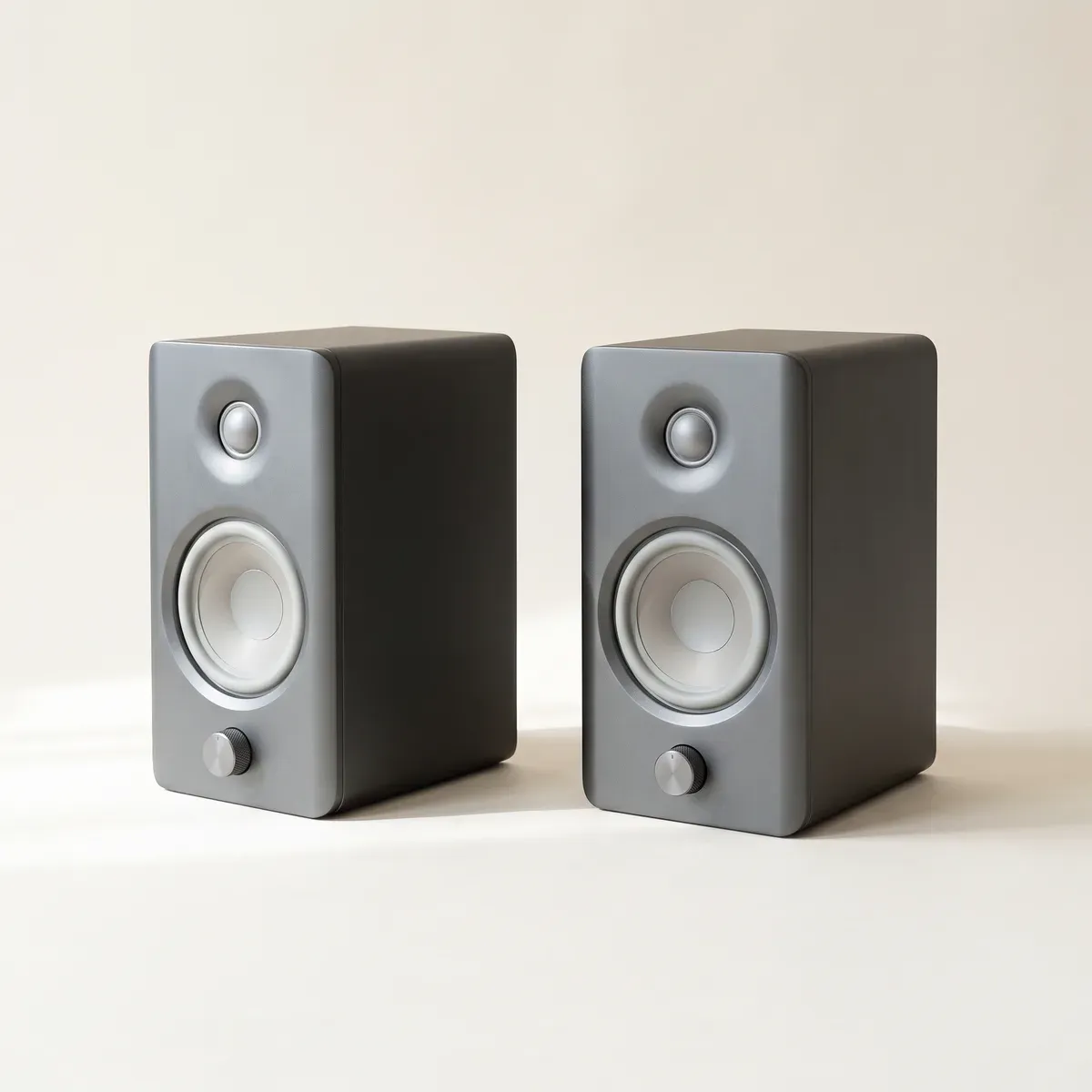
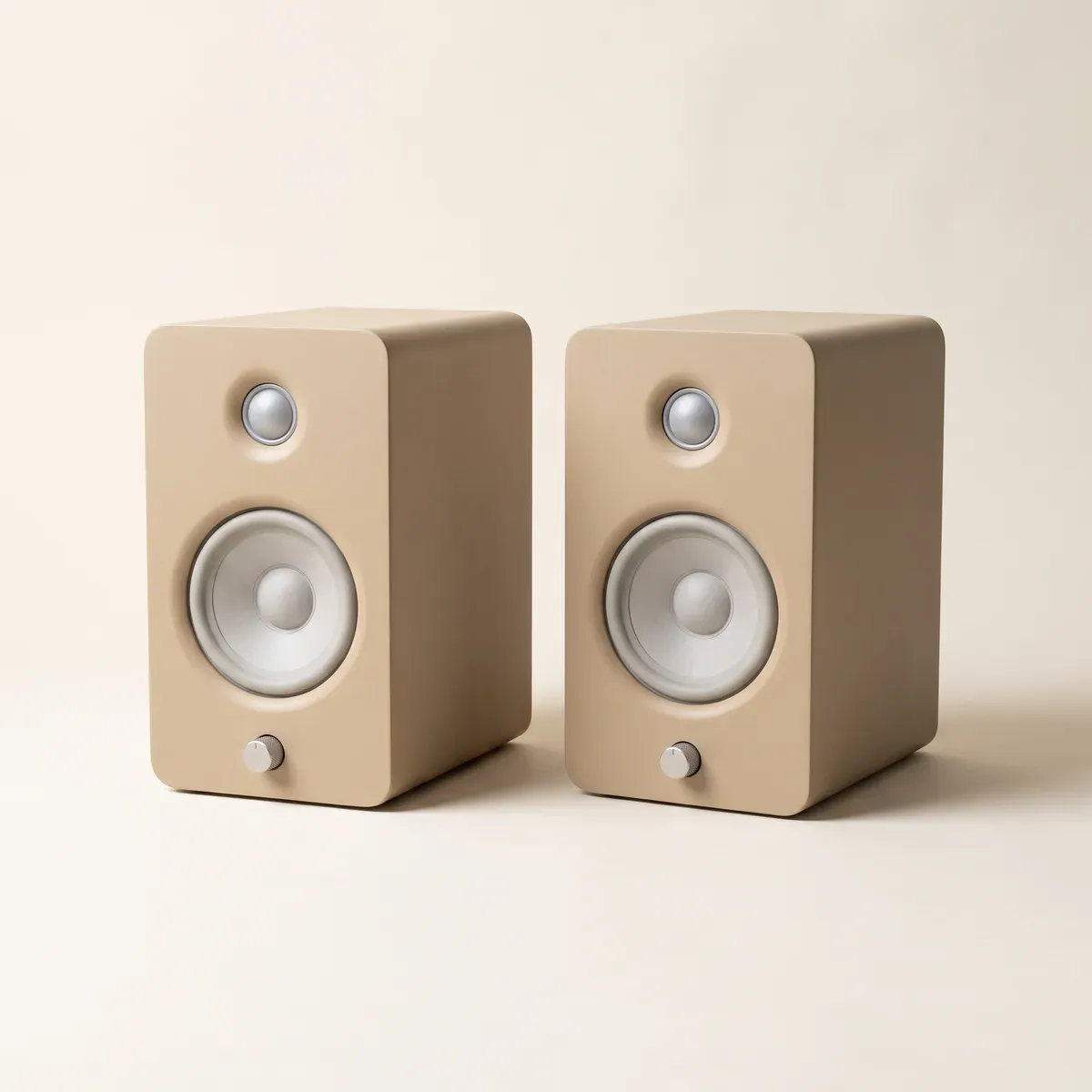
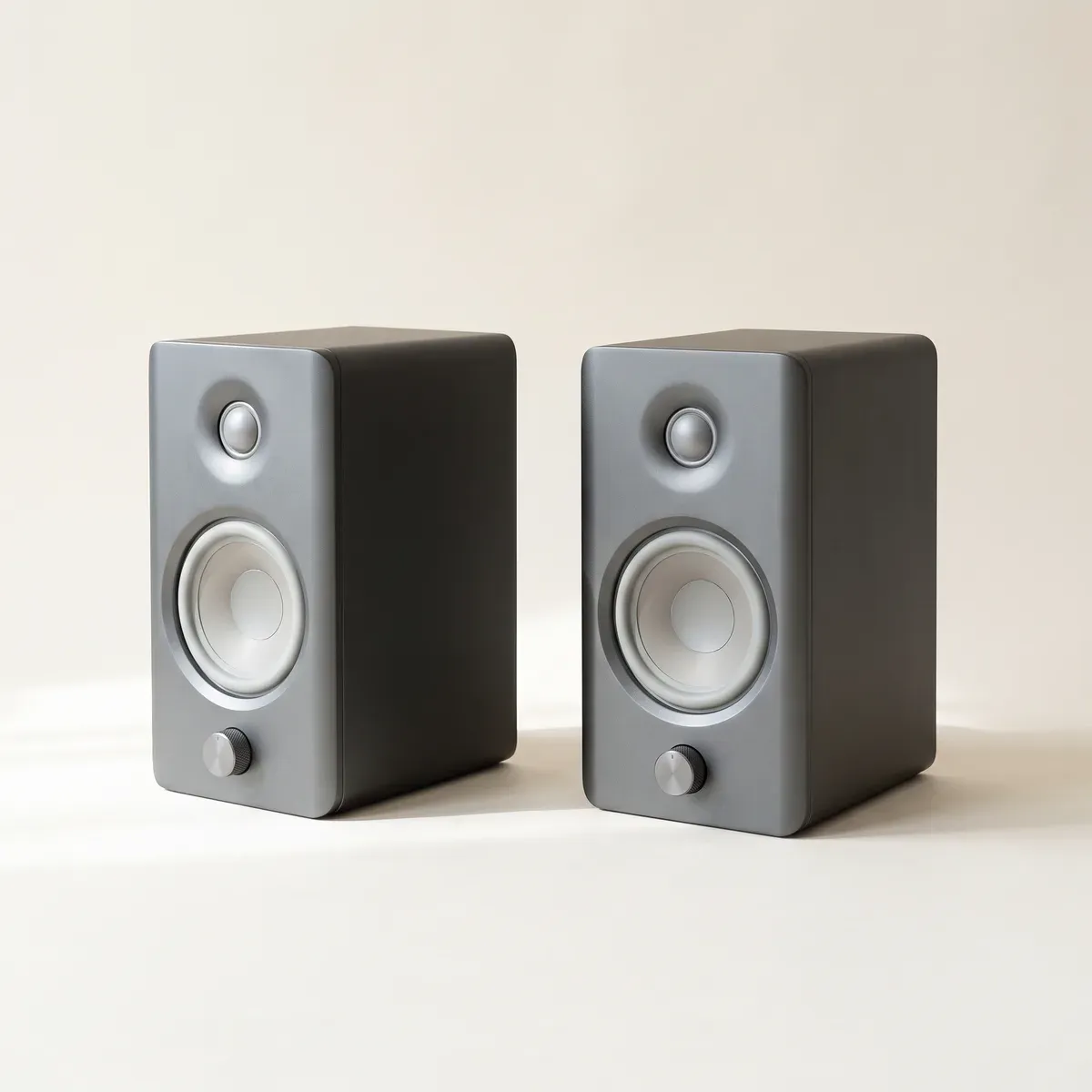
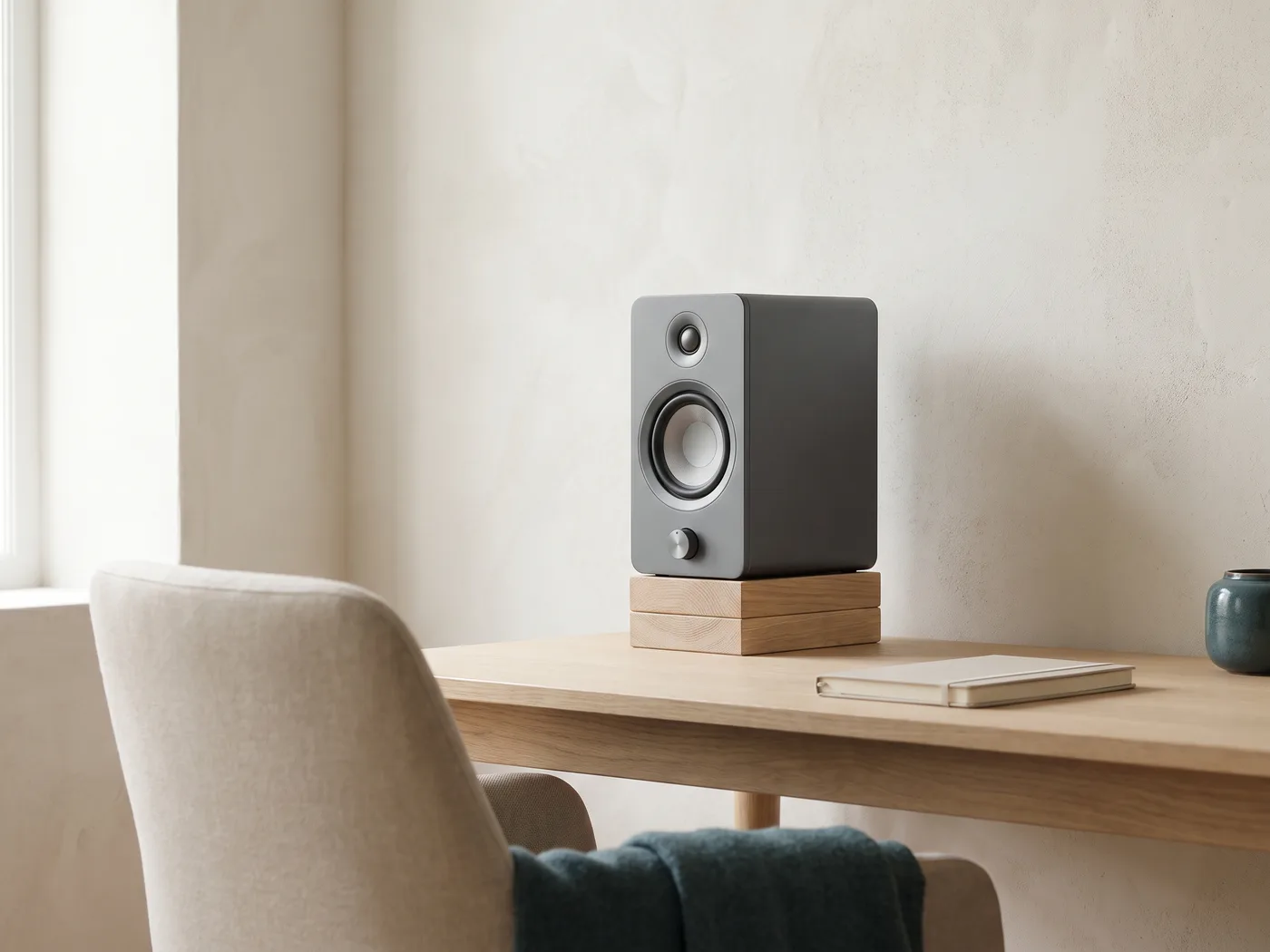
Velden A1 Desk Speaker
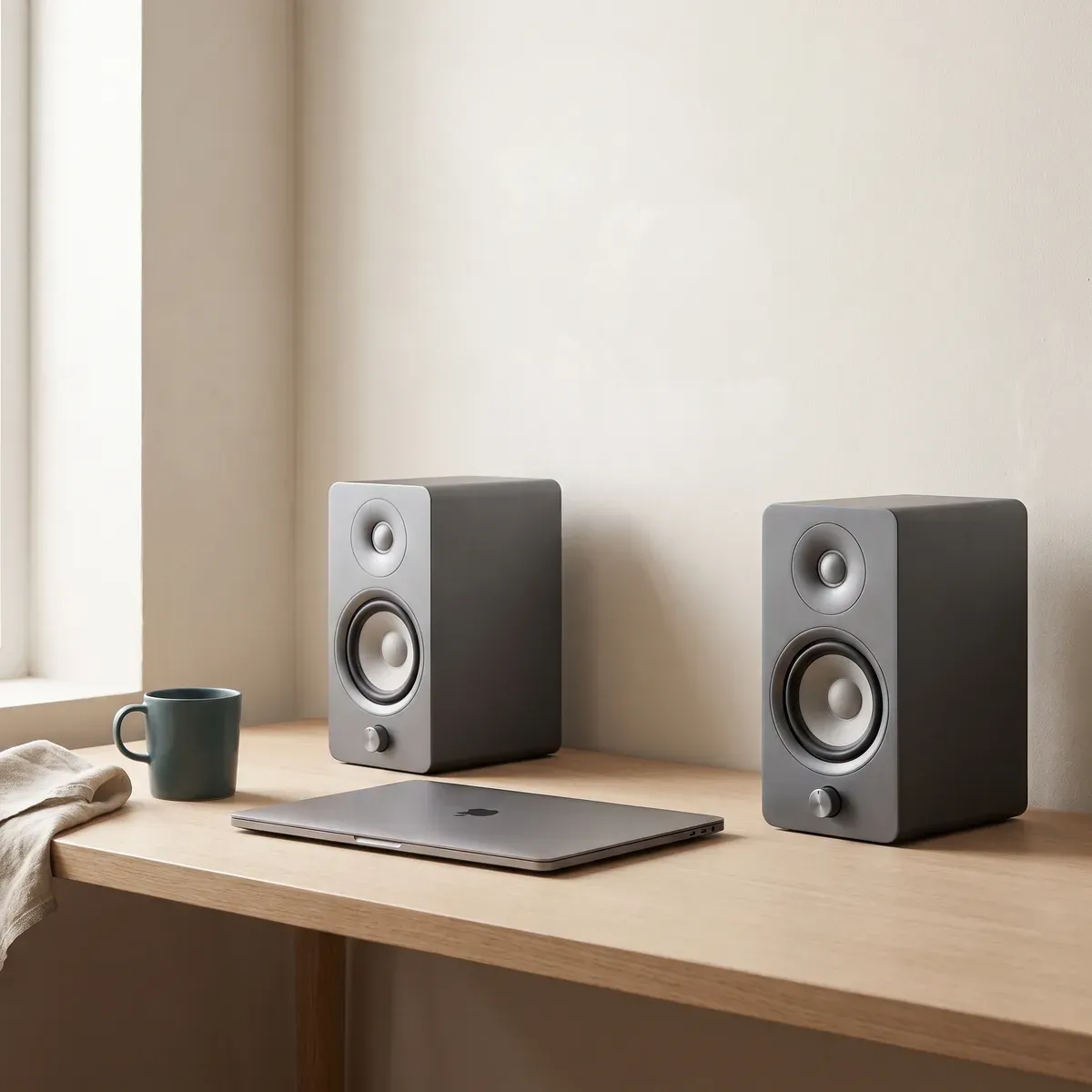
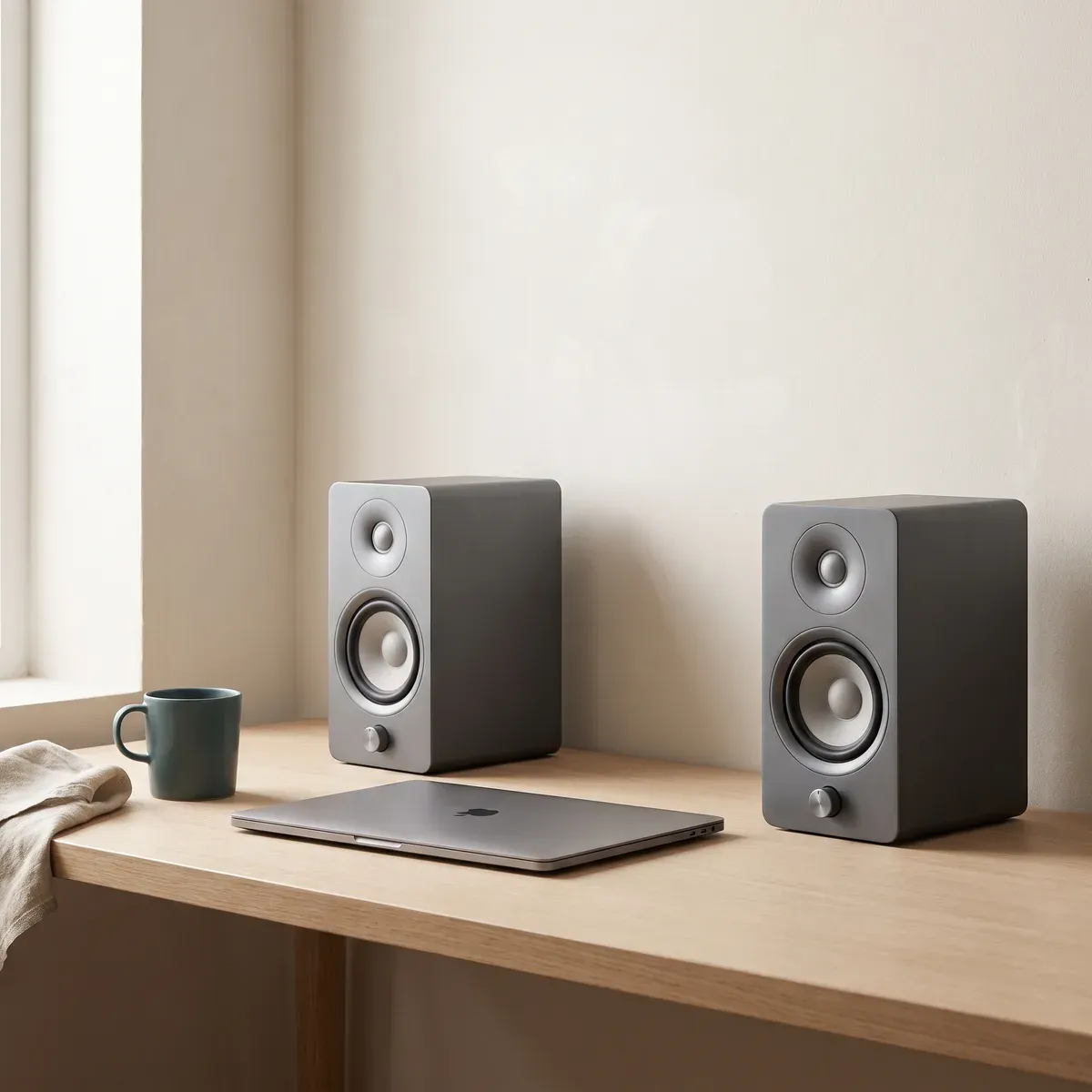
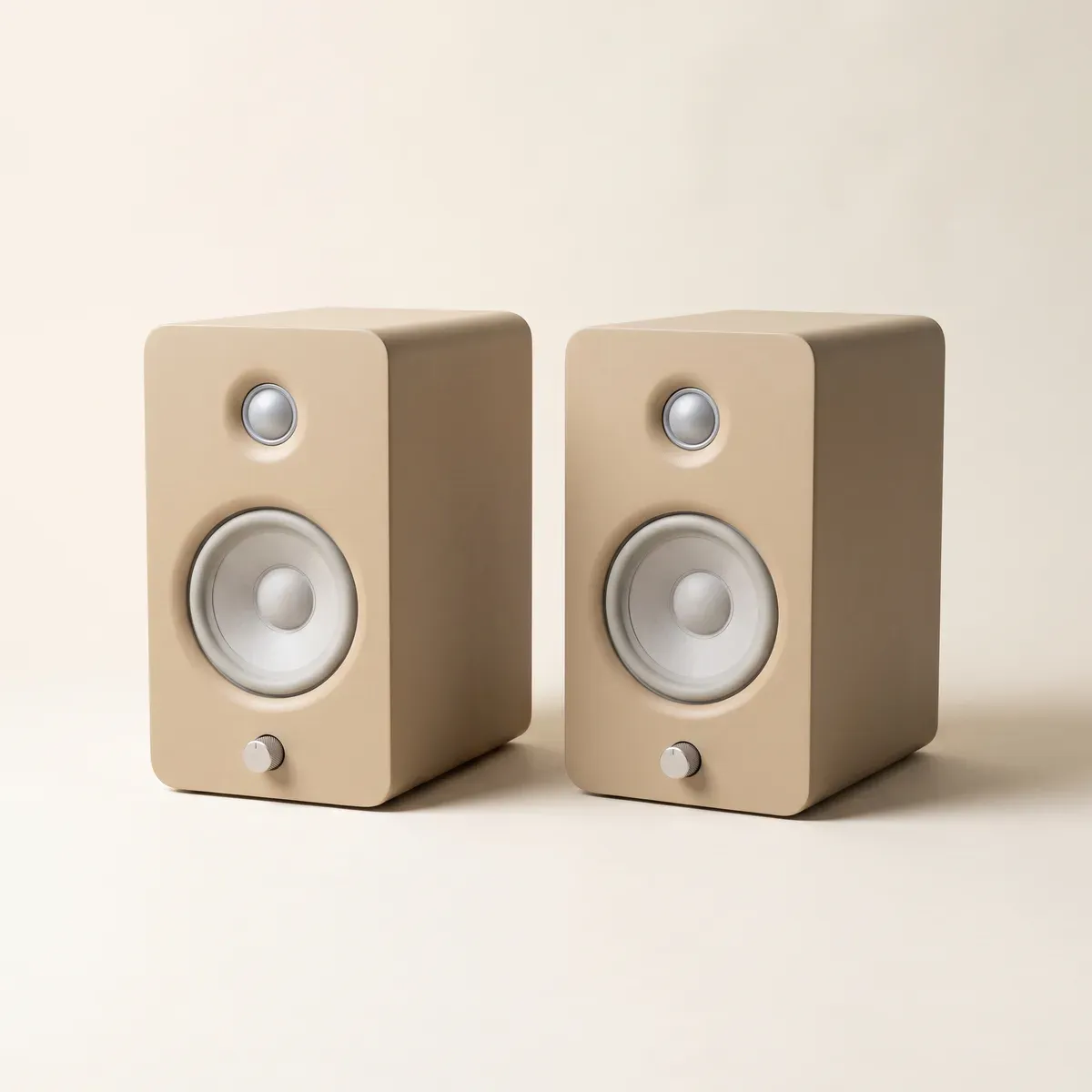
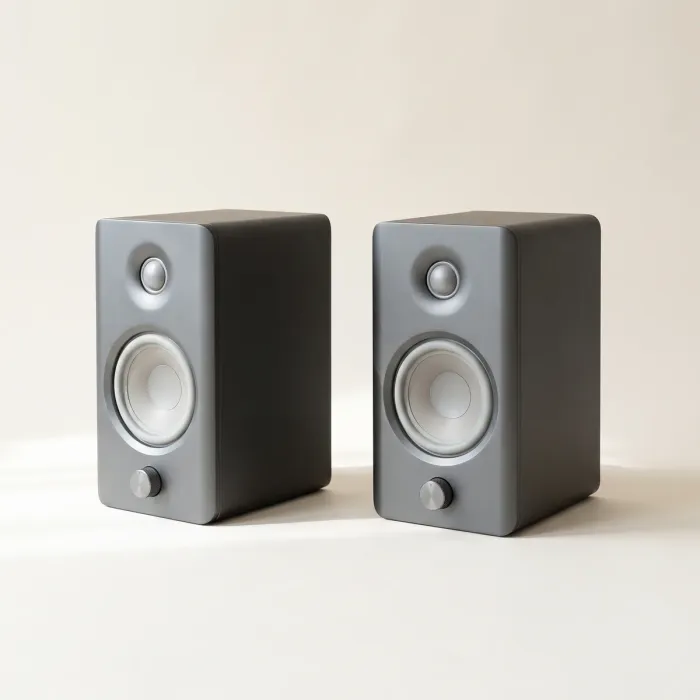
An active two-way pair, voiced for eighty centimetres. The one to start with if your speakers sit on the desk.
£299.00
View
Three pieces, each doing one job properly. None of them needs the others to make sense.
For speakers
An active two-way pair, voiced for eighty centimetres. The one to start with if your speakers sit on the desk.
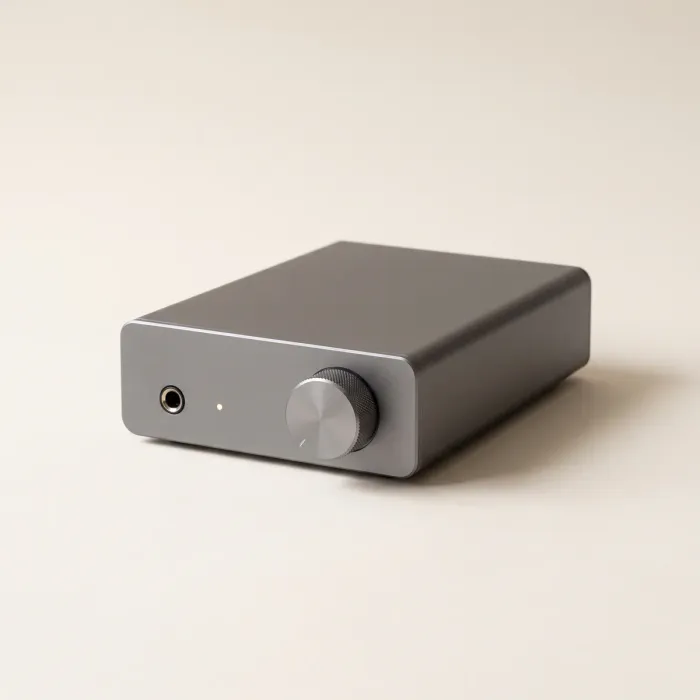
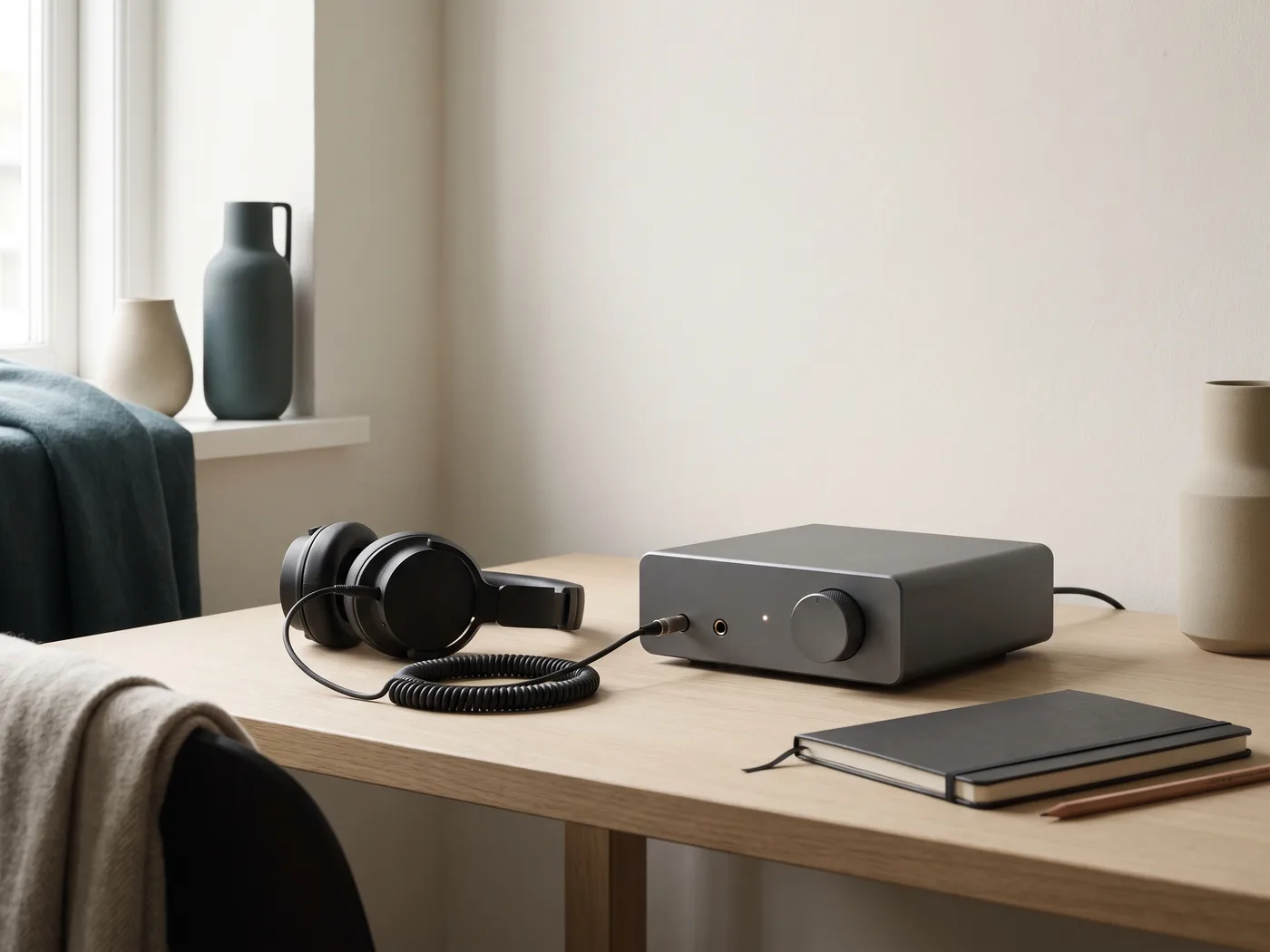
For headphones
A headphone amplifier with a stepped attenuator and headroom for high-impedance headphones.
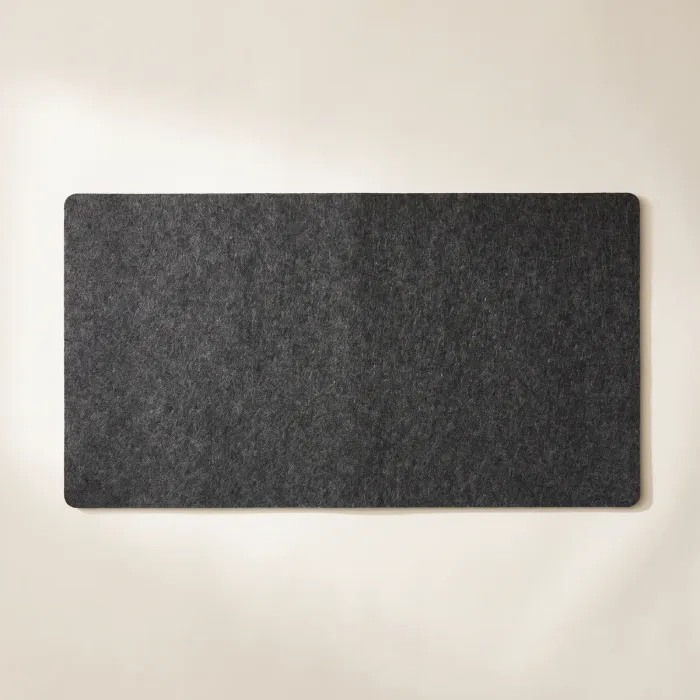
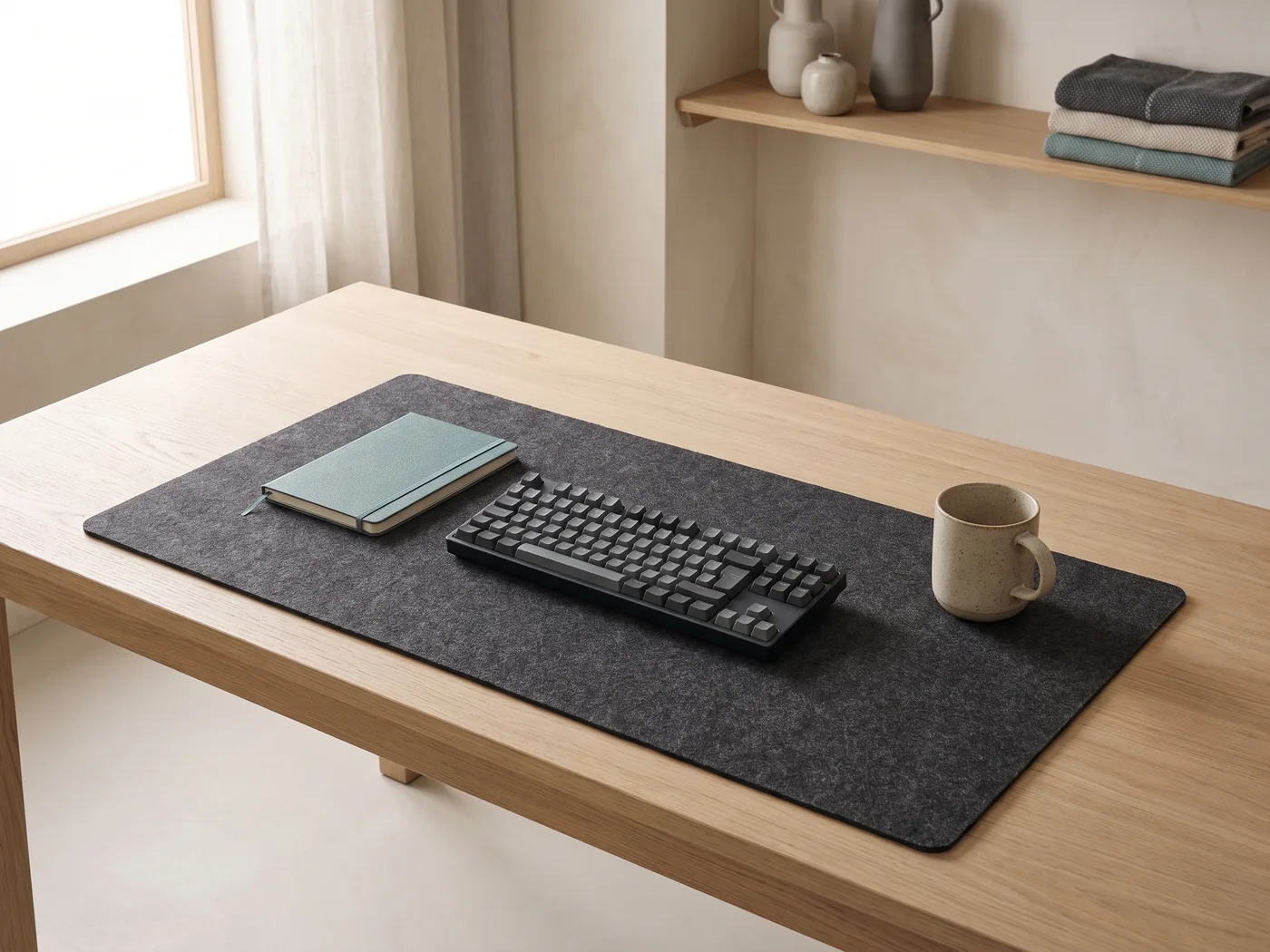
For the desk
A dense wool felt mat that stops the desk resonating under the speakers. Usually the least expensive real improvement.
Three steps, in that order.
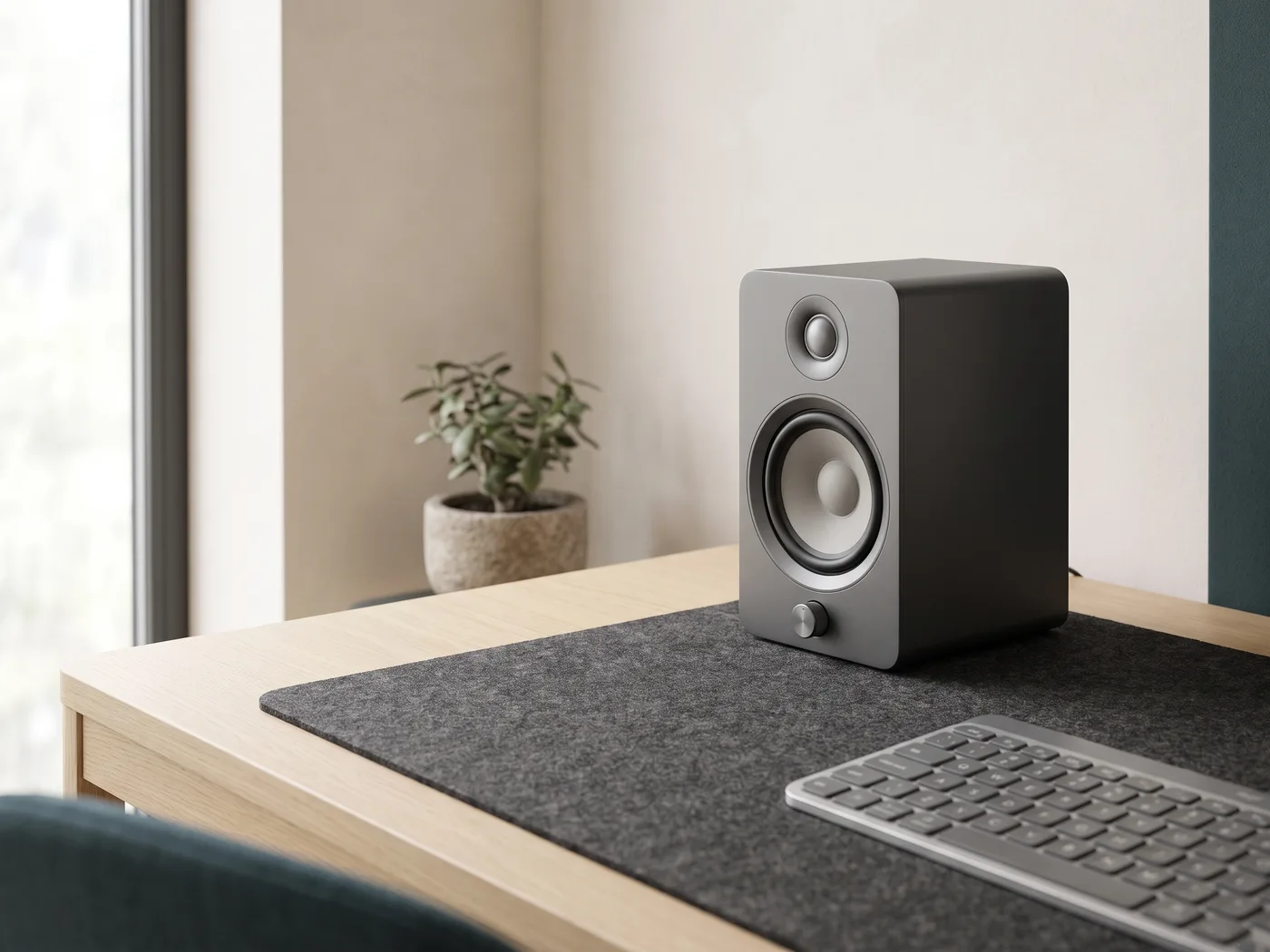
Raise each cabinet until the tweeter sits level with your ears.
Put the pads underneath and angle each one at your head.
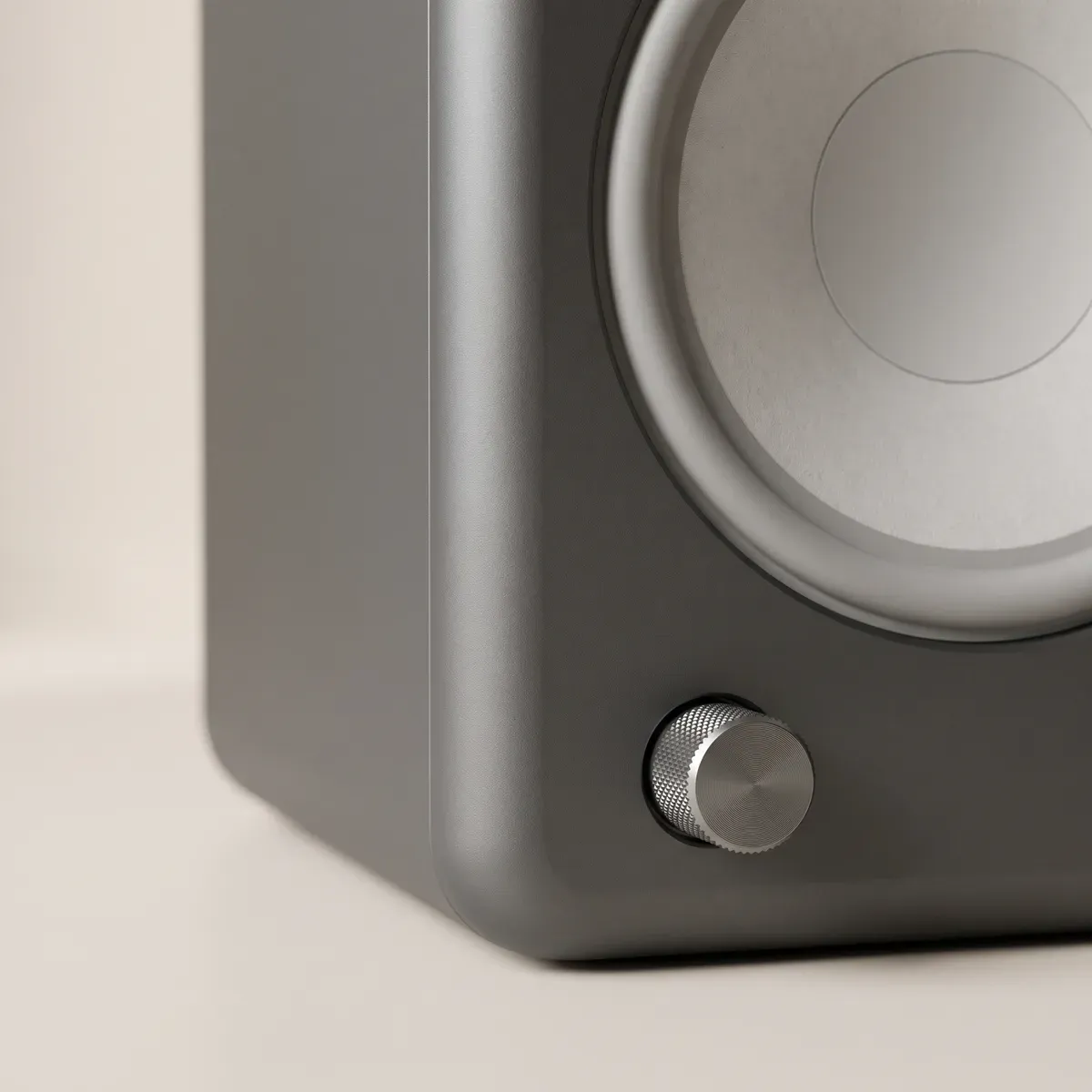
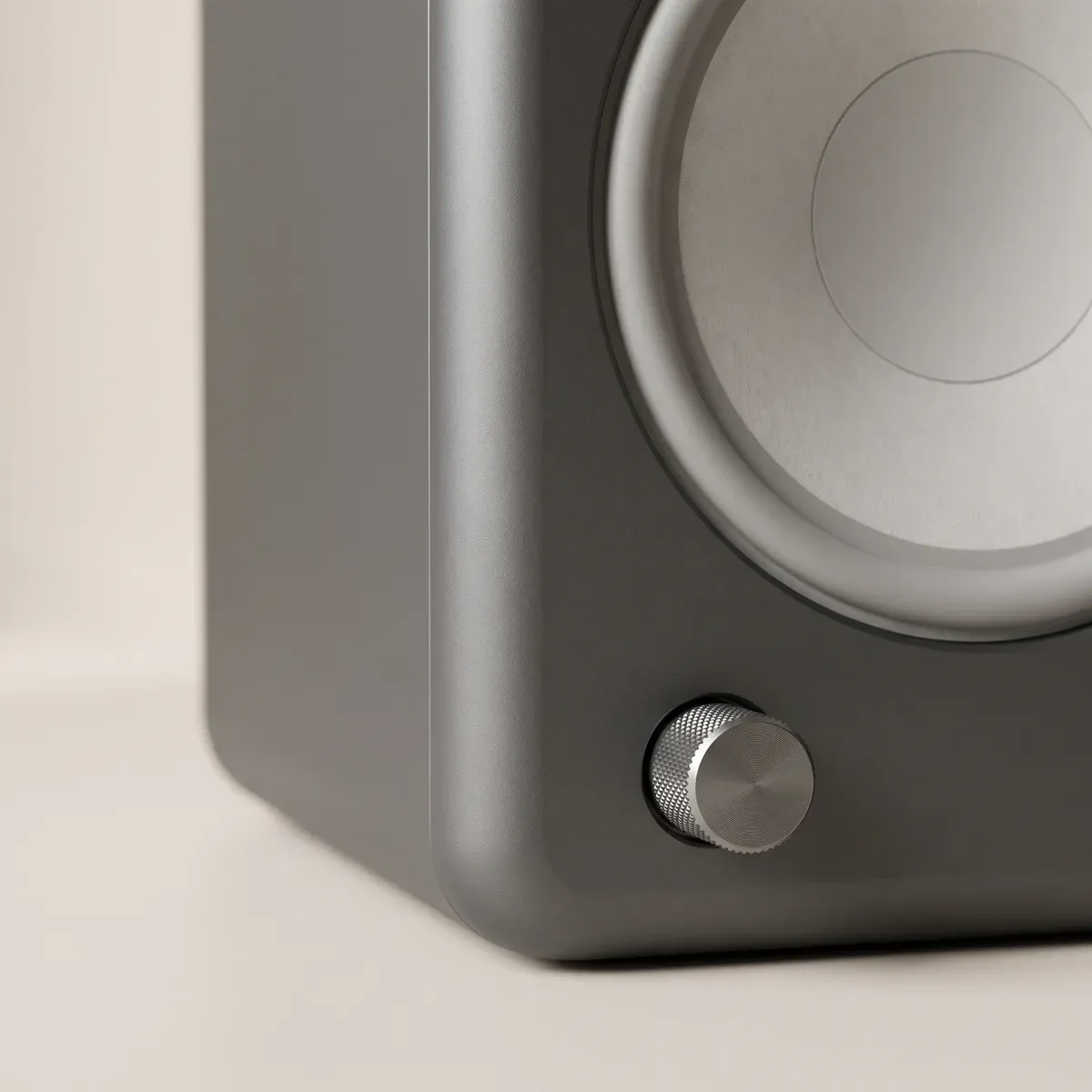
USB-C or the analogue input, then set the volume on the front.
The measurement plot for your pair is in the box.
The full specification, and the measurement plot for your own pair, both ship in the box. Nothing below is a claim about what you will measure at home, because your desk and your room are part of that and ours are not.
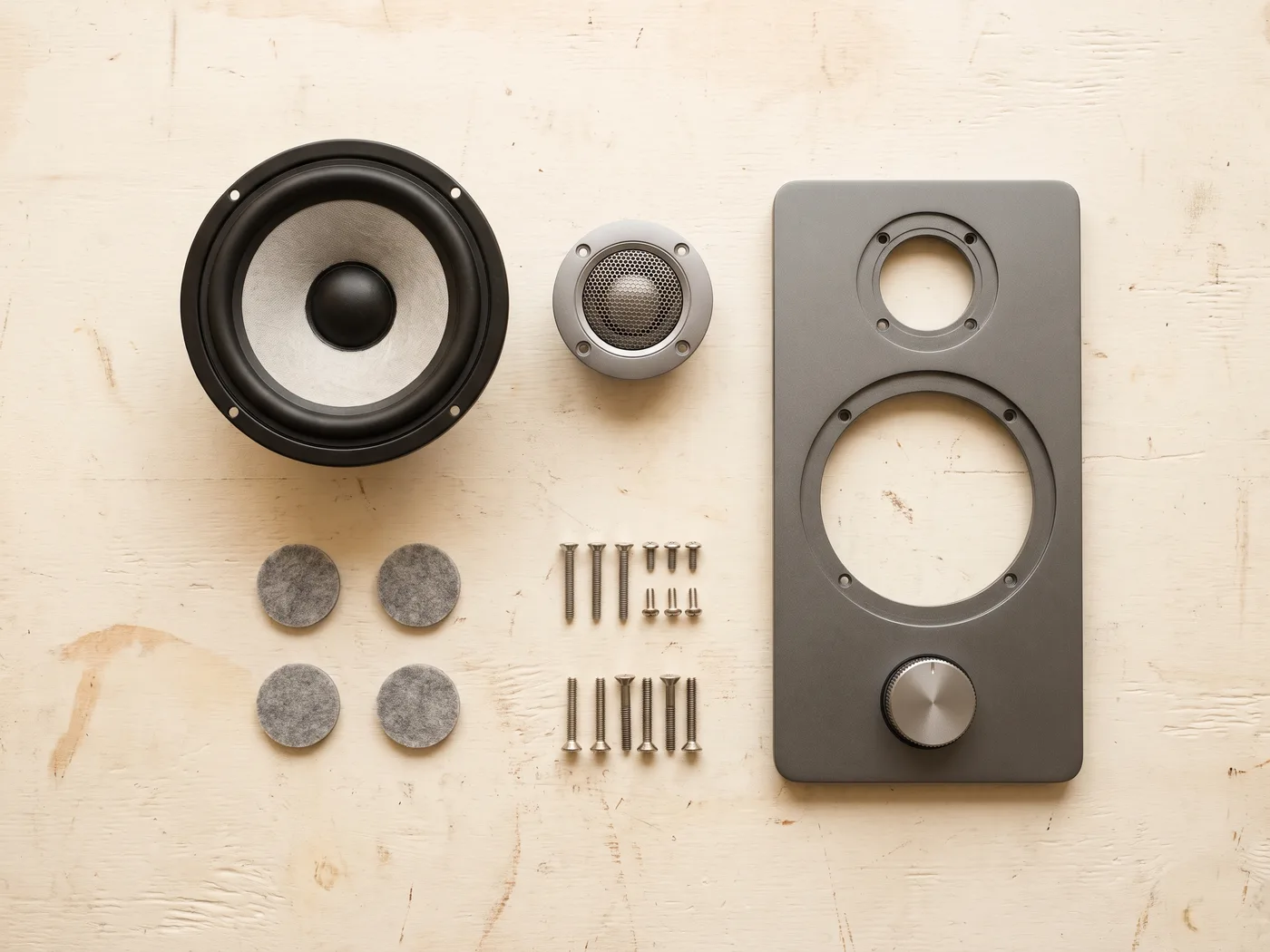
115mm coated paper mid-woofer. 25mm soft dome tweeter on a shallow waveguide. Class D amplification, biamped, 40W to the woofer and 20W to the tweeter. Active crossover at 2.6kHz.
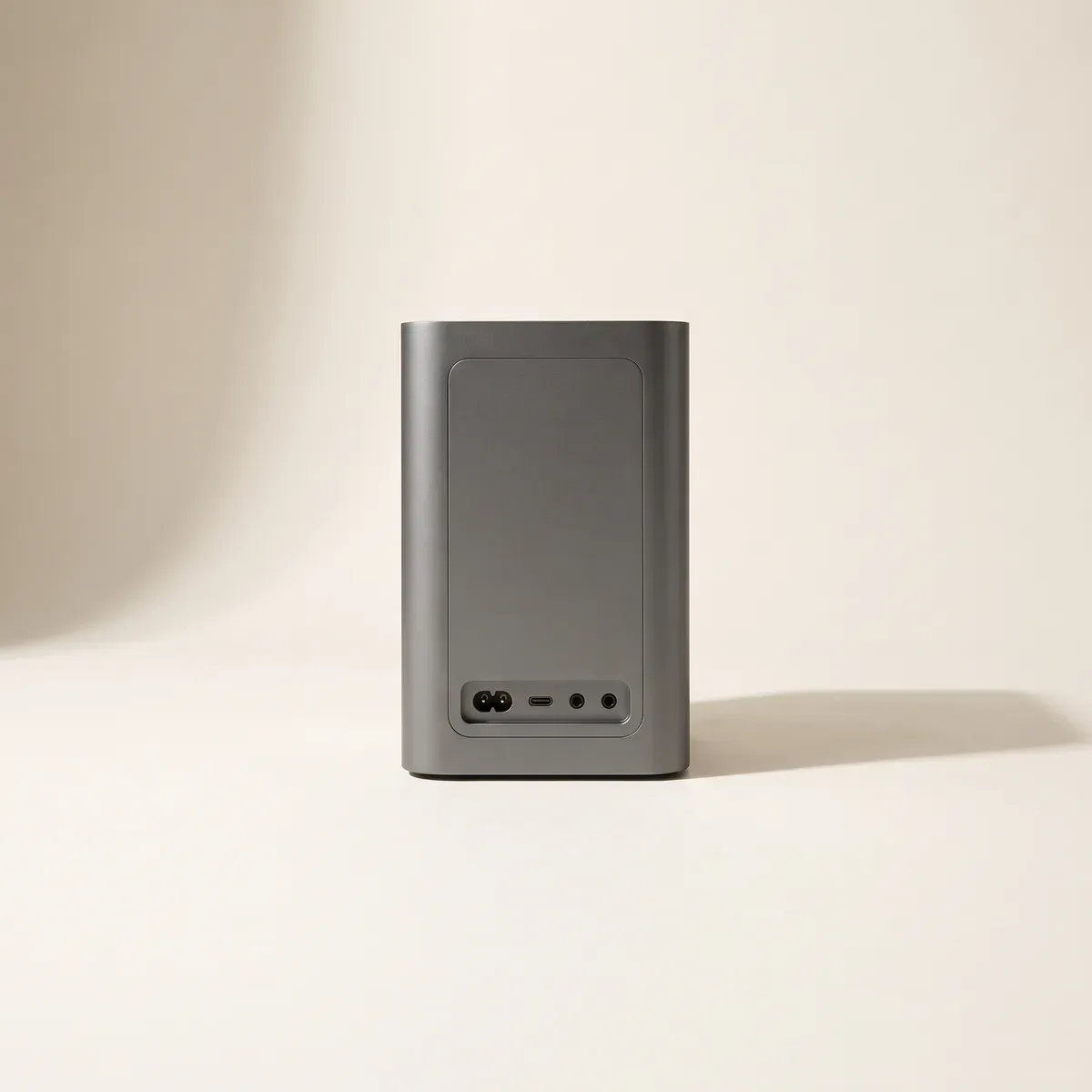
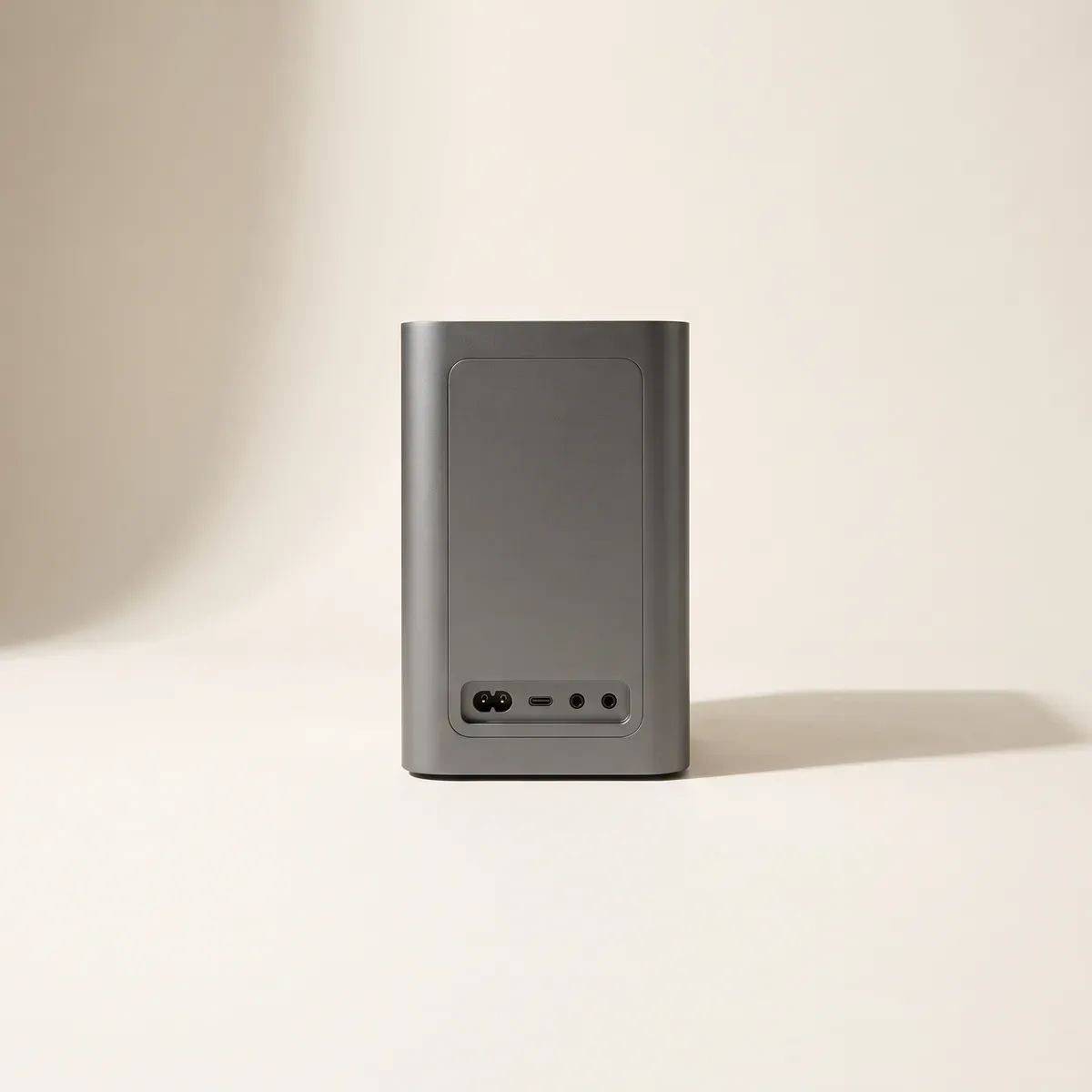
USB-C and unbalanced analogue input, both on the left cabinet. Sealed MDF enclosure, 230 x 150 x 190 mm each, 3.1kg the pair. Front-panel volume. Isolation pads included.
None of this is complicated, and all of it changes what you hear more than a cable will.
Height first, then angle, then everything else.
Get the tweeters to ear height before you judge the sound at all.
Point each cabinet at your head rather than straight down the desk.
A few centimetres off the wall behind them, if the desk allows it.
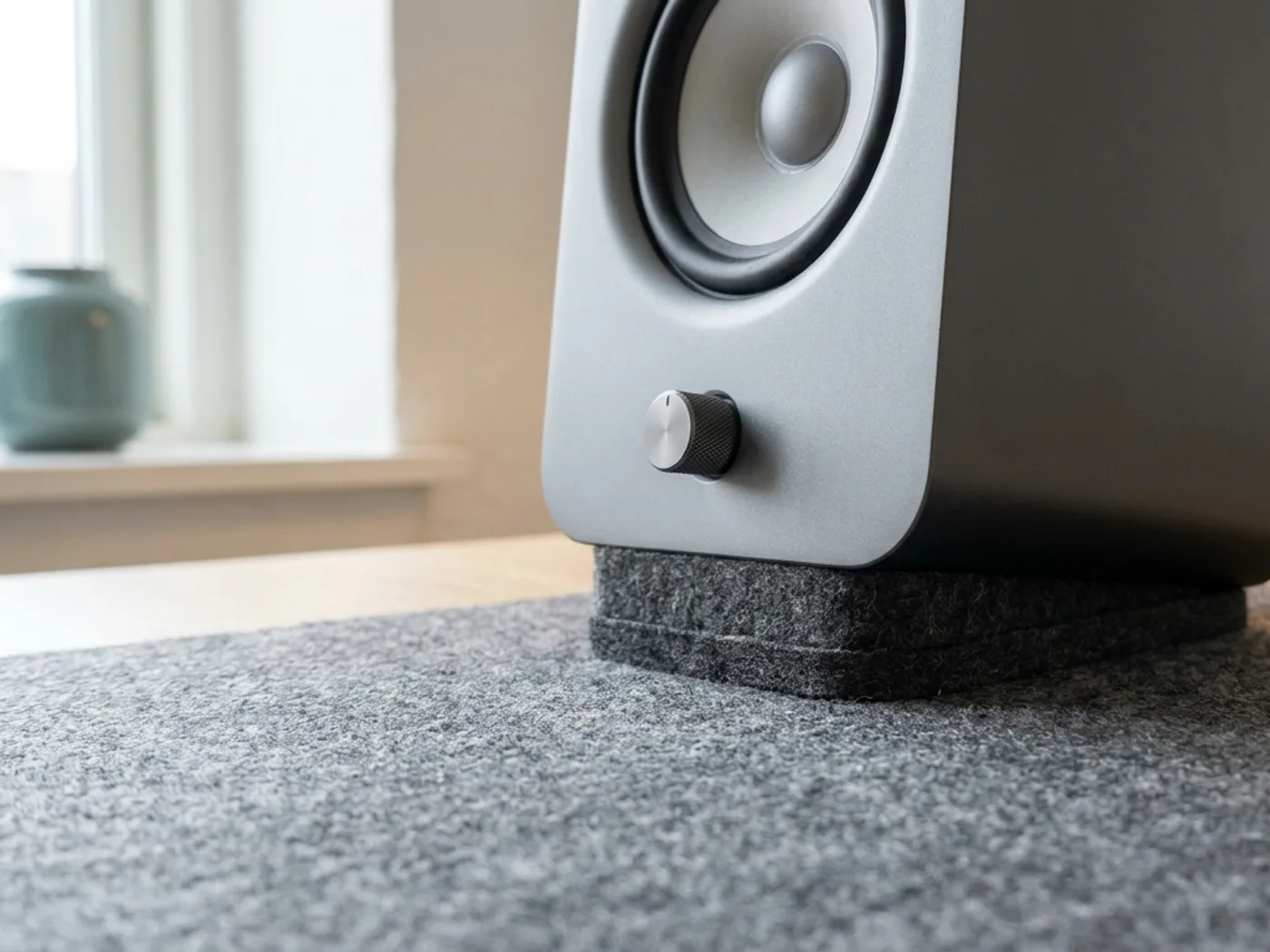
The pads are in the box. A desk is a large flat panel and it will resonate with the speaker if you let it.
Give them a few hours of use before judging the low end.
Keep liquids off the top. It is a desk, and desks have mugs on them.
Active. The amplification is built in, so there is no separate amplifier to buy and no speaker cable to choose.
USB-C from a computer, or the analogue input from anything with a line output. Both are on the left cabinet, and one cable runs across to the right.
You need the tweeters at ear height, which on most desks means lifting them. Stands, a shelf or a stack of books all work. Getting the height right matters more than what you use to do it.
They are voiced flat, so they will not flatter a mix. They are a near-field monitor rather than a mixing-room monitor, and the difference is the room, not the speaker.
Comfortably past where anyone sitting at the desk wants them. They are not a party speaker and running them there is not what they are for.
Assembled and measured in the UK.
Looking for a near-field desk speaker that behaves at the distance you actually sit? That is the whole of what the A1 is for, and it is worth understanding why the distance changes the design.
What it is. The Velden A1 is an active two-way desk speaker, sold as a pair, with a 115mm mid-woofer and a 25mm soft dome tweeter in a sealed cabinet. The amplification is built in and the inputs are USB-C and analogue.
What near-field means. It means the speaker is voiced to be correct at roughly eighty centimetres rather than across a room. At that distance you hear far more of the speaker and far less of the room, which is an advantage: the room is usually the worst thing in the signal path and a desk removes most of it.
Why sealed rather than ported. A port extends the low end and adds a tail to it. Across a room that tail is masked. At eighty centimetres on a hard surface it is audible, and it lands exactly where a lot of music keeps its body. Sealed gives up some depth and keeps the timing.
What to do first. Get the tweeters to ear height. It costs nothing, it takes ten minutes, and it changes more than any purchase at this price does. Placement before equipment, every time.
Who it is not for. Anyone wanting to fill a room, anyone who needs the bottom octave, and anyone looking for room correction or an app. The A1 does one thing.